The Great Sand Dunes National Park
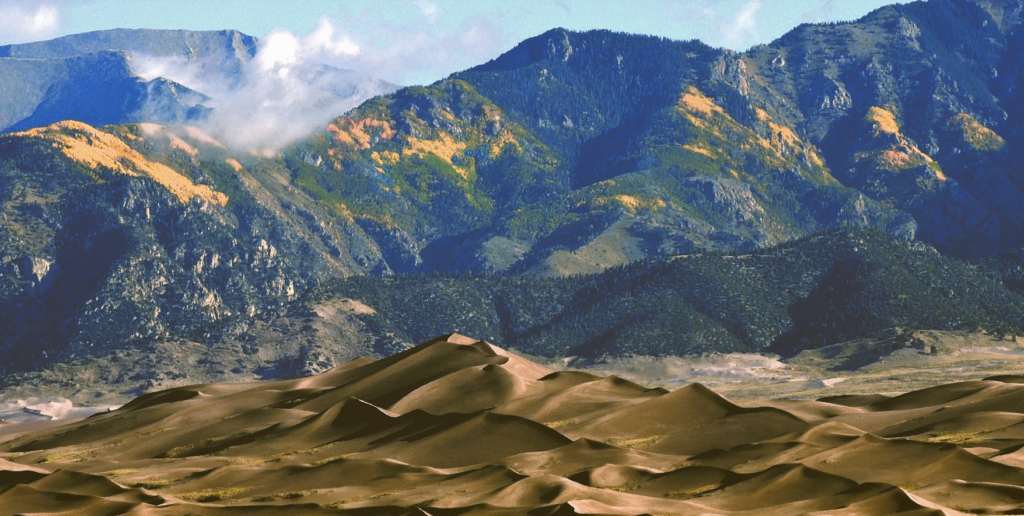
The sun was still low in the sky when I arrived at Great Sand Dunes National Park in southern Colorado, its warm golden glow spreading across the towering dunes ahead. The morning air was crisp, and the silence around me felt almost reverential, as though the landscape itself was holding its breath. I’d seen photos of the dunes before, but standing before them in person was an entirely different experience. These were no ordinary sand dunes. They stretched over 30 square miles, their peaks reaching heights of up to 750 feet, making them the tallest dunes in North America. The sight was both humbling and awe-inspiring.
I parked my car at the entrance to the park, and after grabbing a quick map and some water from the visitor center, I set off towards the dunes. The path from the parking lot leads through a gentle meadow, the grasses swaying lightly in the breeze, but it’s the dunes that begin to call to you as you approach. The transition is surreal — one moment you’re walking through a quiet field, and the next you’re facing a vast ocean of sand, its undulating hills stretching as far as the eye can see.
The first thing that struck me was the sheer size of the dunes. They loomed like ancient giants, their slopes steep and smooth, their curves as soft and flowing as waves in the ocean. I couldn’t help but feel small in their presence. The sand was fine and golden, glimmering in the morning light, and with each step I sank just slightly into it. The air was dry and cool, but the sun had a sharp bite to it already, promising a hot day ahead.
I had come to the Great Sand Dunes with the intention of hiking to the tallest peak, Star Dune, which, at over 700 feet, offers a panoramic view of the entire park. But as I began to climb, the scale of the dunes began to work against me. With every step I took, the sand seemed to shift underfoot, and progress felt slow. Still, there was something meditative about it. The rhythmic sound of my footfalls in the soft sand became my soundtrack, and the occasional breeze brought relief as I trudged upward. I paused frequently to catch my breath, taking in the vastness of the dunes around me. It felt like I was in a different world, a landscape so alien to my usual experience that I half-expected to see some forgotten creatures emerge from the sand.
After what felt like an eternity, I finally reached the summit. The view was worth every ounce of effort. Below me, the dunes rippled and flowed, their intricate patterns cast in shadow by the early morning light. In the distance, the jagged peaks of the Sangre de Cristo Mountains rose sharply, their snow-capped tips contrasting sharply with the warm, golden sands. The park, vast and untouched, stretched out in every direction. I could see the valley below, the wind-sculpted sands that seemed to go on forever, and the distant green of the valley floor where the dunes met the forested foothills.
As I made my way back down, the descent was much easier, but I couldn’t resist stopping often to simply take it all in — the sounds of the wind shifting the sand, the feeling of the sun on my skin, and the vast, peaceful isolation that surrounded me.
When I reached the bottom, I decided to explore the Medano Creek that runs along the base of the dunes, a seasonal stream that offers a refreshing contrast to the heat of the sand. The water was cold and clear, and I waded through it, letting the coolness of the creek wash over me. It was the perfect end to a perfect morning.
The Great Sand Dunes National Park is a place of paradoxes — a seemingly barren desert full of life, a vast emptiness that is anything but empty. It’s a place where time slows down, where the soul can breathe, and where the wonders of nature are both humbling and invigorating. My visit left me with a deeper sense of appreciation for the landscapes that shape our world, reminding me that sometimes, the journey is as much about the experience of the land itself as it is about the destination.
Here’s a guide to help you plan your visit:
1. Location and Accessibility
- Address: Great Sand Dunes National Park is located in southern Colorado, near the town of Alamosa. The park’s address is 11999 State Highway 150, Mosca, CO 81146.
- Driving Directions: The park is about a 4-hour drive south of Denver (approximately 235 miles), a 3-hour drive north of Santa Fe, New Mexico (around 150 miles), or a 2-hour drive from Colorado Springs (about 120 miles).
- From Denver, take I-25 south to US-160 West towards Alamosa, then follow Colorado Highway 150 directly to the park entrance.
- If you’re coming from Alamosa, the park is just 10 miles away to the north on Highway 150.
2. Best Time to Visit
- Spring (March-May): Ideal for cooler temperatures, especially for hiking and outdoor activities. The Medano Creek that runs along the base of the dunes is typically at its peak flow during this time, offering a refreshing experience.
- Fall (September-November): The weather is mild, with fewer visitors, making it a great time for exploring the park.
- Summer (June-August): This is the busiest time, and temperatures can soar, sometimes exceeding 90°F (32°C), particularly in the afternoon. If you visit in summer, try to explore early in the morning or later in the evening to avoid the intense midday heat.
- Winter (December-February): The park is quieter, but it can be cold and snowy, especially in the nearby mountains. Snow on the dunes adds a stunning contrast to the landscape, but some facilities may be closed.
3. Entrance Fees and Hours
- The entrance fee for Great Sand Dunes National Park is $25 per vehicle for a 7-day pass. You can also purchase an annual pass for $45.
- Visitor Center Hours: The Great Sand Dunes Visitor Center is open daily, except on major holidays, typically from 9:00 AM to 4:30 PM. It’s a good place to stop for maps, exhibits, and information about current conditions.
4. Things to Do
- Hiking:
- Dune Hiking: The main attraction is the sand dunes themselves. You can explore the dunes at your own pace. Trails from the Pinnacle Viewpoint or the main parking area lead to the dunes, with the most popular hike being to Star Dune.
- Backpacking: If you’re up for an extended adventure, the park has backpacking opportunities along the Medano Pass Primitive Road. It’s a rugged, remote experience with an opportunity to camp out under the stars.
- Sandboarding & Sand Sledding: For a thrilling experience, bring or rent a sandboard or sand sled. The slopes of the dunes are perfect for these activities, and you can rent equipment from nearby shops.
- Medano Creek: In spring and early summer, Medano Creek provides a refreshing place to wade, cool off, and enjoy the unique landscape where the dunes meet the water.
- Wildlife Viewing: The park is home to various wildlife, including pronghorn antelope, mule deer, and red-tailed hawks. In spring and summer, watch for migratory birds and other creatures along the creek and in the surrounding grasslands.
- Stargazing: The park is recognized as a dark sky park, making it a fantastic place for stargazing, especially in the evening when the sky is free from light pollution.
5. Camping and Lodging
- Camping: The Piñon Flats Campground is the primary campground within the park and is open year-round. It offers both tent and RV sites and is typically open from mid-April to mid-November. Reservations are highly recommended, especially during peak seasons.
- There are also backcountry campsites accessible via hiking or driving the Medano Pass Primitive Road.
- Lodging: If you prefer more comfort, nearby towns like Alamosa (10 miles away) offer hotels, motels, and vacation rentals. Mosca, a small town near the park, also has a few options.
- Nearby Attractions: While at the park, consider taking a detour to nearby Zapata Falls, a beautiful 25-foot waterfall, or explore the San Luis Valley for more scenic adventures.
6. What to Bring
- Water: The park is remote and can get very hot, especially in the summer. Bring plenty of water for hiking or sandboarding.
- Footwear: Hiking boots or sturdy sandals are best for climbing the dunes, but you can also bring a pair of water shoes for crossing Medano Creek.
- Sun Protection: Sunscreen, a hat, sunglasses, and lightweight clothing to protect against the sun.
- Snacks: There are no food vendors in the park, so bring snacks or a picnic if you plan to spend the day.
- Equipment for Sandboarding/Sledding: You can rent sandboards and sleds from local businesses near the park or bring your own.
7. Travel Tips
- Plan for Temperature Fluctuations: Even in summer, the mornings and evenings can be chilly, so bring layers of clothing.
- Permit for Off-Road Driving: If you want to drive on the Medano Pass Primitive Road, note that it’s a rough 4×4 route, and a high-clearance vehicle is recommended. Make sure to check road conditions ahead of time as it can get impassable after heavy rain or snow.
- Safety: Always be cautious on the dunes. The heat and isolation can be intense, so avoid hiking during the hottest part of the day, and keep an eye on the weather for sudden changes.
Visiting Great Sand Dunes National Park is an unforgettable experience. Whether you’re hiking the towering dunes, cooling off in Medano Creek, or stargazing under a vast, dark sky, this park offers a unique way to connect with nature and explore one of Colorado’s most stunning landscapes.